Purdue Agribusiness Review, Volume 1, Issue 2
Strong assets, weak collaboration
Agricultural innovation regions often possess world-class research institutions, startups, corporate R&D operations and producer networks, yet still struggle to convert those assets into innovation at scale. The reason is rarely a shortage of resources. Universities, research institutions, technology startups and corporate R&D operations may all be present in the same region, well-funded and individually productive. What they often lack is a mechanism for combining those assets to create genuinely new shared value. Agricultural innovation zones are no exception. The regional innovation systems literature has established this pattern across sectors and geographies: asset presence does not produce innovation performance. What closes the gap is not more resources. It is a discipline for combining the resources already there.
This specific failure is not a governance problem, a funding problem or a leadership problem. It is a collective action problem: organizations capable of collaborating are stuck in modes of interaction that fall short of innovation.
They cooperate: attending the same events, avoiding conflict and following shared protocols. Some coordinate: running joint programs and sharing resources toward agreed outcomes. Almost none are collaborating in the full sense: recombining their assets to create new solutions to a shared challenge. The distinction between these three modes is not semantic. It describes three different kinds of collective action, each requiring a different level of trust and producing a different class of outcome.
This article develops that argument in three steps: the 3C framework as a diagnostic tool, Strategic Doing as the protocol that addresses the gap it identifies and the São Paulo State Agribusiness Innovation Corridor, or Corredor Agro, as evidence of the discipline at work. The case is our evidence, not our subject. The subject is the discipline.
Cooperation, coordination and collaboration
The term “collaboration” is among the most overused in organizational and regional development discourse. It is applied to networking events, joint press releases, shared databases and genuine co-creation, activities that differ in kind, not merely degree. This imprecision is not harmless. When leaders conflate cooperation with collaboration, they design interventions that produce the former while expecting the latter, and they cannot understand why their innovation ecosystems underperform.
The 3C Interaction Framework (Morrison, 2025) provides a more precise vocabulary, grounded in three observable factors: purpose, outcome and communication pattern. Table 1 summarizes the framework.
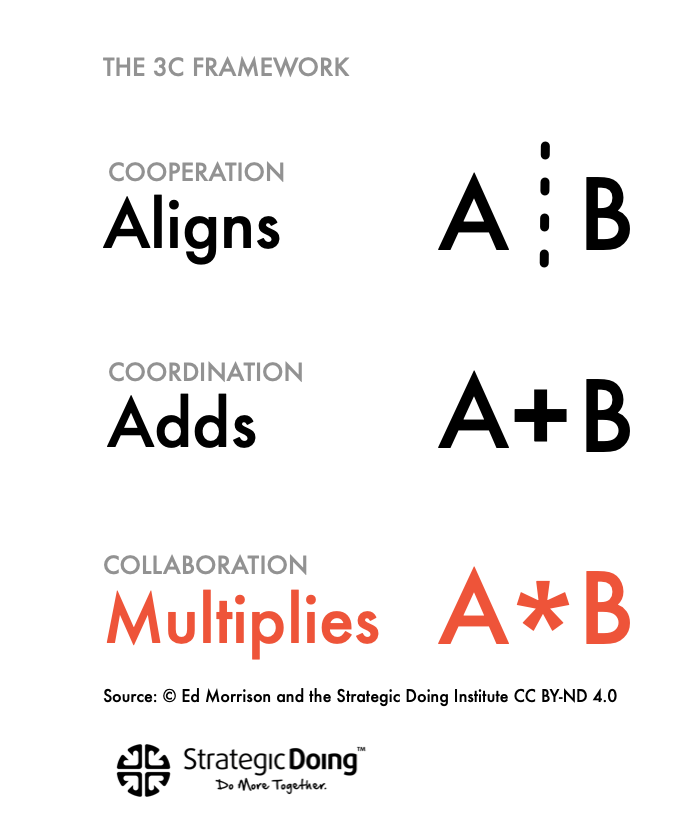
Table 1. The three modes of collective action
Mode | Purpose | Outcome | Trust Required | Communication |
Cooperation | Avoid conflict; align activities | Separate, known outcomes for each party | Low — follow rules of the road | Infrequent, informal |
Coordination | Pool resources toward a shared goal | Shared, known outcome (A + B) | Moderate — structured, predictable exchange | Structured, scheduled |
Collaboration | Recombine assets to create new shared value | Shared, unknown outcome (A × B) | High — intense, flexible, unstructured interaction | Frequent, unstructured, unpredictable |
Source: Morrison (2025). “The 3C Field Guide: How Practitioners Move from Cooperation to Coordination to True Collaboration,” White Paper. Strategic Doing Institute.
Cooperation is the foundational mode: organizations aligning activities to avoid conflict, each pursuing separate, known outcomes. It is genuinely valuable because it reduces friction. But it produces no new shared value. Coordination goes further: organizations pool resources toward a shared, known outcome. Communication becomes structured through the meetings, shared documents and milestone reviews of project management. The outcome is additive, not emergent. Coordination executes decisions already made. It does not discover opportunities not yet visible.
Collaboration is different. Collaborating organizations recombine their distinctive assets to create shared value that is genuinely new and, at the outset, unknown. The metaphor is chemical rather than additive: not A plus B but A times B, producing something neither element contains. The trust required is high because parties are co-investing in outcomes they cannot fully predict or control. This is the mode that produces recombinant innovation. It is also the mode that most regional innovation zones have almost no structural mechanism to produce.
The collective action failure in most regional innovation zones is a gap between the cooperation that exists and the collaboration that the region’s potential requires. That gap cannot be bridged by governance structures, strategic plans or convening events alone. It requires a specific discipline. It requires building trust rapidly across institutions that have no prior basis for collaborative investment, identifying early opportunities for genuine recombination and sustaining momentum through the early period when the outcome is unknown and the risk of failure is highest.
Strategic Doing: A protocol for the collaboration gap
Strategic Doing emerged from a practical challenge: how do independently functioning organizations move from cooperation to collaboration when no one has authority over anyone else?
Beginning in the 1990s, Ed Morrison developed and tested the discipline across communities, public agencies and industry networks. In 2005, the work moved to Purdue University, where it was further developed and validated through applications involving federal agencies, industry organizations and regional innovation initiatives.
The result was Strategic Doing: a collaboration protocol designed for open networks where participants must create value together without relying on hierarchy or formal authority. Rather than beginning with governance structures or long-range plans, the discipline focuses on helping organizations identify opportunities for shared value, take small steps together and build trust through action.
Why it works in open networks
Strategic Doing was designed as an open standard, a shared protocol that anyone can learn and use without permission or licensing fees.
The design reflects a core insight of the discipline: the most difficult environments for collaboration are open networks, where no one has authority over anyone else. In such settings, participants need a common process they can trust more than they need a central authority to direct them.
Because of this design, anyone can learn the discipline, and no one owns it. Yet, the institute can maintain standards and continue the evolution of the discipline. A practitioner trained in Indiana and another working in Portuguese in Brazil can apply the same protocol with fidelity, enabling the discipline to scale globally. The results are already visible. In 2022, Julio José Prado, Ecuador’s Minister of Production and Trade, deployed Strategic Doing across 22 business clusters as part of the country’s national competitiveness strategy. Many of these clusters focused on agribusiness development and high-value agricultural exports.
How Strategic Doing works
Strategic Doing accelerates the progression from cooperation toward collaboration through four specific design features.
- A cognitively diverse core team. Every Strategic Doing engagement begins with a small core team, typically two to six people, who design and guide the work. The key criterion is not title or formal authority, but cognitive diversity: a mix of perspectives, disciplines and ways of thinking that span the boundary between ideation and implementation. Research on cognitively diversity suggests that groups with different perspectives often outperform homogeneous ones when solving complex problems because they reveal more of the solution space. Strategic Doing is designed to activate that advantage. But diversity only yields results when people feel safe enough to contribute what they know. That is why the first rule, create a psychologically safe space, is not a warm-up exercise. It is an enabling condition for everything that follows.
- A shared challenge and a framing question. Rather than asking, ‘What are some common goals?” which produces coordination at best, Strategic Doing starts at a different point: “Imagine we could link and leverage our resources. What new value could we create?” This appreciative framing surfaces asset combinations that participants had not recognized as possibilities. It creates momentum toward collaboration rather than relying on governance to force alignment.
- The 30/30 cycle. Trust is not a precondition for collaboration. It is an outcome. Strategic Doing builds trust through repeated, low-stakes joint action: a review of what was learned in the past 30 days and renewed commitments for action over the next 30 days. When that action produces a visible result, it raises the trust baseline for the next commitment. Organizations that cannot yet trust one another for large co-investments can often commit to a small, defined action over thirty days. Each cycle deepens the pattern of interaction that collaboration requires. Governance follows demonstrated value. It does not precede it.
- The guide role. Strategic Doing distinguishes the guide from the consultant, project manager or conventional facilitator. A guide keeps conversations focused so collaborative opportunities can surface without directing the outcome. The guide’s authority is based on experience, not position. It derives from mastery of the discipline, not from organizational standing. This distinction matters in open networks where no one has authority over anyone else. A guide who begins directing outcomes is producing coordination, not collaboration.
Corredor Agro: Building an innovation corridor
Embrapa, Brazil’s national agricultural research corporation, is a federal agency with units distributed across the country, each focused on a different dimension of agricultural science. It is one of the world’s leading agricultural research institutions and sits at the center of Brazil’s ambition to lead in tropical agriculture.
Vitor Mondo, Embrapa’s innovation ecosystem supervisor, is responsible for moving knowledge out of the laboratory and into practice, closing the gap between what researchers produce and what farmers, companies and ecosystems can use. He develops strategies for engaging innovation ecosystems and designs collaborative spaces such as hubs and labs. His role is about combining assets across boundaries.
Around 2016, Mondo attended a Strategic Doing session at Purdue and left with a question he would shape several years of work. The interior of São Paulo state, a roughly 400-kilometer corridor linking Campinas, Piracicaba, São Carlos, Ribeirão Preto and São José dos Campos, contained an extraordinary concentration of agricultural research and academic capacity: five Embrapa units, more than 300 agtech startups and two of Brazil’s leading agricultural colleges. Each city had distinct strengths: Campinas in digital agriculture and food systems, Piracicaba in traditional agronomy, São Carlos in engineering and animal science, and Ribeirão Preto in bioenergy.
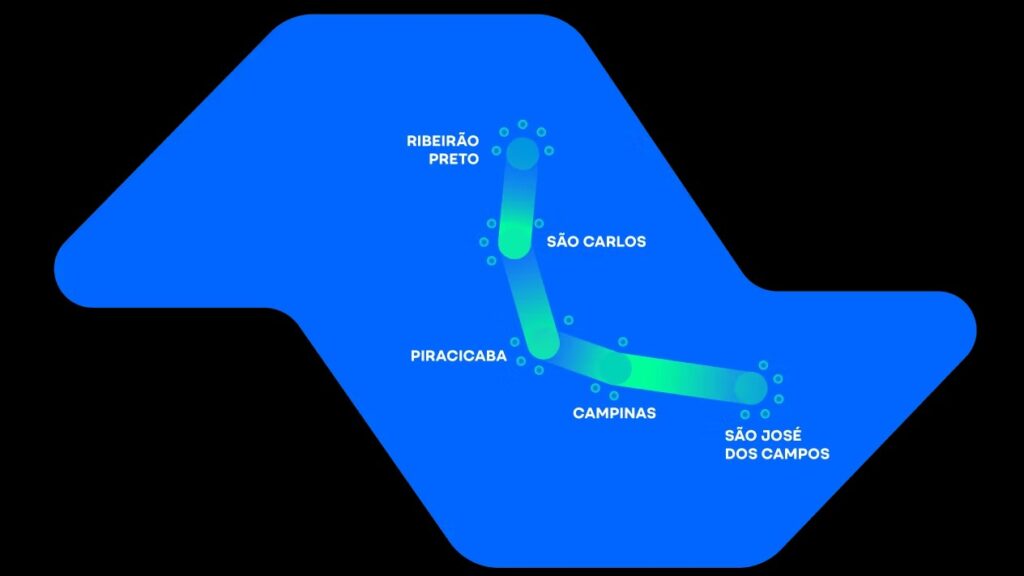
The assets were substantial, but largely invisible to one another. The cities competed rather than collaborated, leaving their combinatorial potential uncaptured. Piracicaba’s agronomy, São Carlos’s engineering and Campinas’s digital infrastructure remained unlinked. In 2021, Mondo reached out to Morrison with a framing question: what if these distributed assets were combined into a single agricultural innovation zone? Could Strategic Doing help make that possible?
That question became the foundation of the São Paulo State Agribusiness Innovation Corridor, or Corredor Agro. It also illustrates something essential about Strategic Doing: a framing question is not a plan or a program but a possibility that reorganizes how people see, and use, what they already have.
Moving from cooperation to collaboration
The 3C framework predicted what Mondo’s asset map confirmed: the corridor was rich in cooperation and thin on collaboration. More than 100 universities and science and technology institutions were distributed across the five cities, connected by road and by occasional professional contact, but not by active collaborative networks.
The decision to use Strategic Doing rather than a conventional planning process reflected a clear-eyed assessment of what the situation required. A comprehensive regional plan would have produced coordination infrastructure: a steering committee, a governance document and a work plan before demonstrating any value. In a network of independent organizations with competing priorities, that sequence often produces performative commitment that evaporates under pressure. Strategic Doing demonstrates value through early collaborative action, then builds governance from that demonstrated foundation.
The first phase established a working framing question: How can we turn this territory into a global hub for agricultural innovation? Three institutions began to interact more closely: Embrapa, APTA (the Agribusiness Research Agency of São Paulo state), and Sebrae (Brazil’s small business support service). Representatives from these three agencies formed the core working team that later became the foundation of the governance model. A memorandum of understanding between Embrapa and Sebrae created lightweight coordination infrastructure with genuine accountability.
By 2023 and 2024, early collaborative signals were emerging. The Speed Agro startup acceleration program brought together technology parks, incubators, accelerators and hubs across the five-city geography, the kind of cross-institutional asset recombination that cooperation alone cannot produce. The number of voices speaking on behalf of the corridor expanded, with public, political and business leaders carrying the same message, a sign that shared ownership was developing.
In August 2025, a strategic alliance with a nonprofit based in Piracicaba formalized operational management of the corridor. With that structure in place, opportunity profiles that previously could not be pursued began to emerge receiving international delegations, connecting with the UK Innovation Corridor and responding to direct private-sector demand for a scalable process through which companies can access the ecosystem’s hidden assets and innovate more rapidly.
What the case demonstrates
The most significant feature of the Corredor Agro trajectory is not its content but its sequence. The corridor moved from a baseline of cooperation through emerging coordination infrastructure toward the early conditions for collaboration. The sequence followed the logic of Strategic Doing: early wins first, then governance; trust built through action, not declared in advance.
Whether the collaborative momentum proves durable, and what recombinant innovation it ultimately enables, is the open question. The 3C framework predicts a specific risk: that networks under pressure will retreat from collaboration toward the coordination and cooperation modes that require less trust. What the Corredor Agro has demonstrated so far is that the progression is observable, manageable and repeatable, and that Strategic Doing is the protocol that moves it.
Implications for practice
Three lessons emerge from the Corredo Agro experience:
Start with a small, cognitively diverse core team.
Collaboration rarely begins with large committees. It begins with a small group capable of connecting ideas to actions.
Build trust through action rather than governance.
Organizations are more willing to commit to small, visible actions than large, uncertain investments. Trust grows through repeated success.
Treat collaboration as a capability.
Like strategy, leadership or innovation, collaboration improves with deliberate practice and disciplined processes.
Why collaboration requires discipline
Innovation zones underperform not because their assets are inadequate but because those assets remain stuck in cooperation mode: productive but largely disconnected from one another. Moving from cooperation to coordination is achievable through standard project management. Moving from coordination to collaboration, the mode that produces genuinely new shared value, requires something different: a shared protocol for building trust, surfacing opportunities, making commitments and learning across organizational boundaries. That protocol is what Strategic Doing provides.
Vitor Mondo’s framing question: “What if we combined all of these agricultural assets across multiple cities to form a single innovation zone?” was not a plan. It was a possibility. Strategic Doing gave it structure. The Corredor Agro case documents what happens when a discipline designed for open networks meets a well-defined collective action problem in an agricultural innovation context of genuine consequence. The principles it illustrates apply wherever strong institutions work in parallel rather than together.
References
Castañer, X., & Oliveira, N. (2020). Collaboration, coordination, and cooperation among organizations: Establishing the distinctive meanings of these terms through a systematic literature review. Journal of Management, 46(6), 965–1001.
Cooke, P. (2001). Regional innovation systems, clusters, and the knowledge economy. Industrial and Corporate Change, 10(4), 945–974.
Morrison, E. C. (2021). Strategic doing: A pragmatist methodology for complex collaboration [Doctoral dissertation, University of the Sunshine Coast].
Morrison, E. C. (2025). “The 3C Field Guide: How Practitioners Move from Cooperation to Coordination to True Collaboration”. White paper. Strategic Doing Institute. Licensed CC BY-ND 4.0.
Morrison, E. C., Hutcheson, S., Nilsen, E., Fadden, J., & Franklin, N. (2019). Strategic doing: Ten skills for agile leadership. Wiley.
Page, S. E. (2008). The difference: How the power of diversity creates better groups, firms, schools, and societies. Princeton University Press.
Porter, M. E. (1998). Clusters and the new economics of competition. Harvard Business Review, 76(6), 77–90.
Schrage, M. (1995). No more teams: Mastering the dynamics of collaboration. Currency Doubleday.
Strategic Doing Institute. (2026). Strategic doing as an open standard: A shared protocol for collaboration (White Paper v.1.4). Strategic Doing Commons.
About the Center for Food and Agricultural Business
Founded in 1986, the Purdue University Center for Food and Agricultural Business is celebrating 40 years of working with the agribusiness industry to develop leaders and inform better decision-making. Housed within Purdue’s Department of Agricultural Economics, the center connects faculty expertise with the practical challenges facing food and agricultural companies.
The center delivers professional development programs, industry research and graduate education designed specifically for agribusiness professionals. Offerings include open-enrollment workshops, custom corporate training and the MS-MBA in Food and Agribusiness Management, a dual-degree program developed with industry for working professionals.
Through its research and publications – including the Purdue Agribusiness Review – the center shares industry insights from Purdue faculty and collaborators to help agribusiness leaders navigate change and make more informed strategic decisions.