
Reviewers
Anna Aarstad, Graduate Research Assistant, Purdue University
Valerie Kilders, Marshall Martin Agricultural Science and Technology Policy Assistant Professor, Purdue University
Article
Plant-Based versus Animal-Based Proteins: Does It Have to Be Either/Or? by Saroj Adhikari, Brandon R. McFadden, Trey Malone, and Jayson L. Lusk
Source
Adhikari, Saroj; McFadden, Brandon R.; Malone, Trey; Lusk, Jayson L., Plant-Based Versus Animal-Based Proteins: Does It Have to Be Either/Or?, Journal of Agricultural and Resource Economics, Volume 50, Issue 1, January 2025, Pages 1-20
Summary
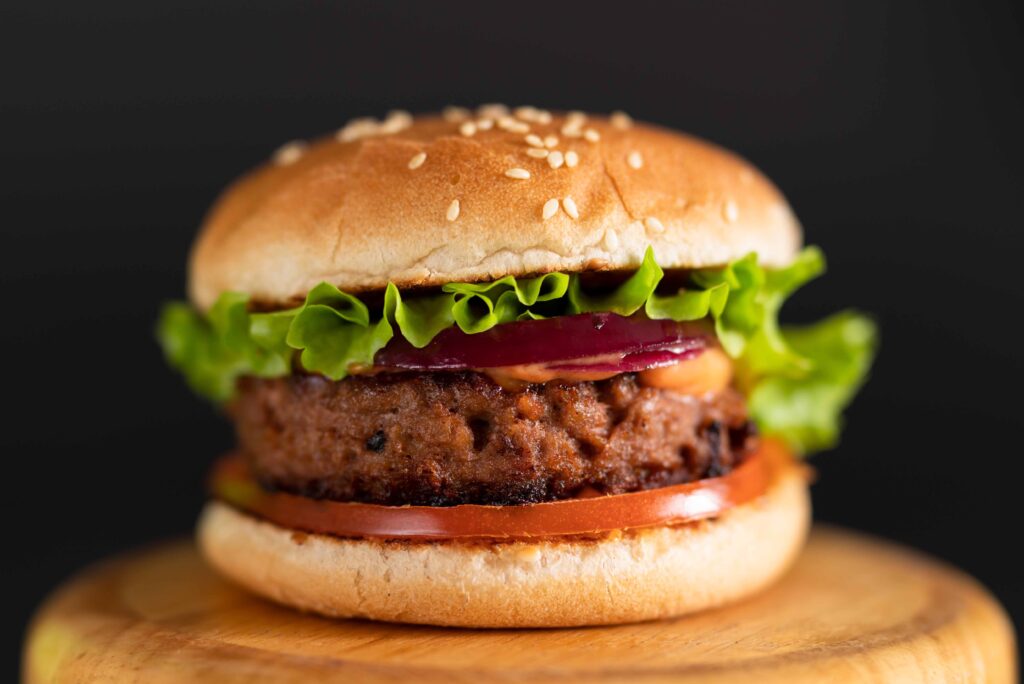
As consumers increasingly seek to balance health, taste and sustainability, hybrid meat products (burgers made from blends of beef and plant-based proteins) have emerged as a potential compromise between traditional meat and fully plant-based alternatives. Yet market research on the hybrid burgers’ market potential is sparse.
Acknowledging this gap, Adhikari and colleagues (including CAB’s Dr. Trey Malone and former department head Dr. Jayson Lusk) conducted an online survey of 1,200 U.S. consumers to assess demand for hybrid burgers and identify which consumer segments are most likely to purchase them.
Respondents completed a simulated market experiment where they chose between several burger options at different prices. The choices included a 100% beef burger, 100% soy burger and multiple hybrid options combining real beef with either pea or soy in different quantities.
The results confirm that beef is clearly still king. However, the authors identified four distinct consumer segments with meaningful differences: Meat Purists, Meat-Forward Flexitarians, Plant-Forward Flexitarians, and Price Sensitive consumers.
- Meat Purists and Price Sensitive consumers overwhelmingly prefered 100% beef and are unlikely to adopt hybrid products.
- Meat-Forward Flexitarians, who enjoy beef but are open to partially plant-based blends, showed strong interest in hybrid burgers, particularly 50/50 blends.
- Plant-Forward Flexitarians favored both hybrids and fully plant-based options, with the highest preference for blends including black beans and mushrooms.
Hybrid burgers shifted some consumption away from 100% beef among flexible consumers, but had almost no effect on total beef demand, suggesting hybrid meat options complement rather than replace traditional beef.
Demographic trends also emerged: younger generations and Hispanic consumers were more likely to fall into the flexitarian segments, while older and price-sensitive consumers largely maintained traditional beef preferences.
What does this mean for food and agricultural business?
The findings from this study offer several clear takeaways for food and agribusiness firms that are monitoring the hybrid meat market. Although most consumers still prefer traditional beef, there is a meaningful group of shoppers who are interested in blended options, especially when products feel familiar, affordable and connected to health or sustainability goals. Rather than threatening the beef category, hybrid products may create incremental growth opportunities, particularly among younger and more flexible eaters.
These three themes are especially relevant:
- Hybrid products complement – not replace – beef.
Hybrid burgers had almost no effect on total beef demand, even among consumers who were open to blended options. For beef supply chains, blended products may offer an additional avenue for growth without cannibalizing core sales. They could appeal to consumers interested in moderation, sustainability or balanced diets.
- Price matters.
The Price-Sensitive segment highlights the need for competitive pricing and promotions for adoption. Production efficiencies, cost control and promotional strategies will be essential. Without competitive pricing, hybrid products are unlikely attract mainstream consumers.
- Understand consumer diversity.
Interest in hybrid meat products is centered among Meat-Forward and Plant-Forward Flexitarians. These groups offer the greatest opportunity for targeted marketing and product development, while Meat Purists and Price Sensitive consumers remain firmly committed to 100 percent beef.
The study also shows that preferences vary by age, eating habits and ethnicity. This emphasizes the need for tailored marketing strategies. Understanding these nuances can help firms position hybrid products effectively in a rapidly evolving protein market.